Frequently asked questions
- 01
🪵 Durability
Glulam has a uniform, engineered structure and is produced with a controlled moisture content of 8–12%. Because it is already dry, it is far less prone to cracking or warping compared to solid timber. This stability makes glulam exceptionally durable and resistant to long‑term deformation.
💪 Strength
Thanks to its layered construction, glulam can withstand significant loads, making it suitable even for multi‑storey buildings. It performs reliably under moisture and temperature fluctuations, giving it a service life that can exceed 100 years.
🔥 Thermal Performance
Glulam naturally provides strong thermal insulation. Its low thermal conductivity helps reduce heating and cooling costs, contributing to long‑term energy efficiency.
🌱 Environmental Friendliness
Made from natural wood and safe adhesives, glulam does not release harmful substances into the environment. It is a sustainable building material with a low carbon footprint.
✨ Aesthetics
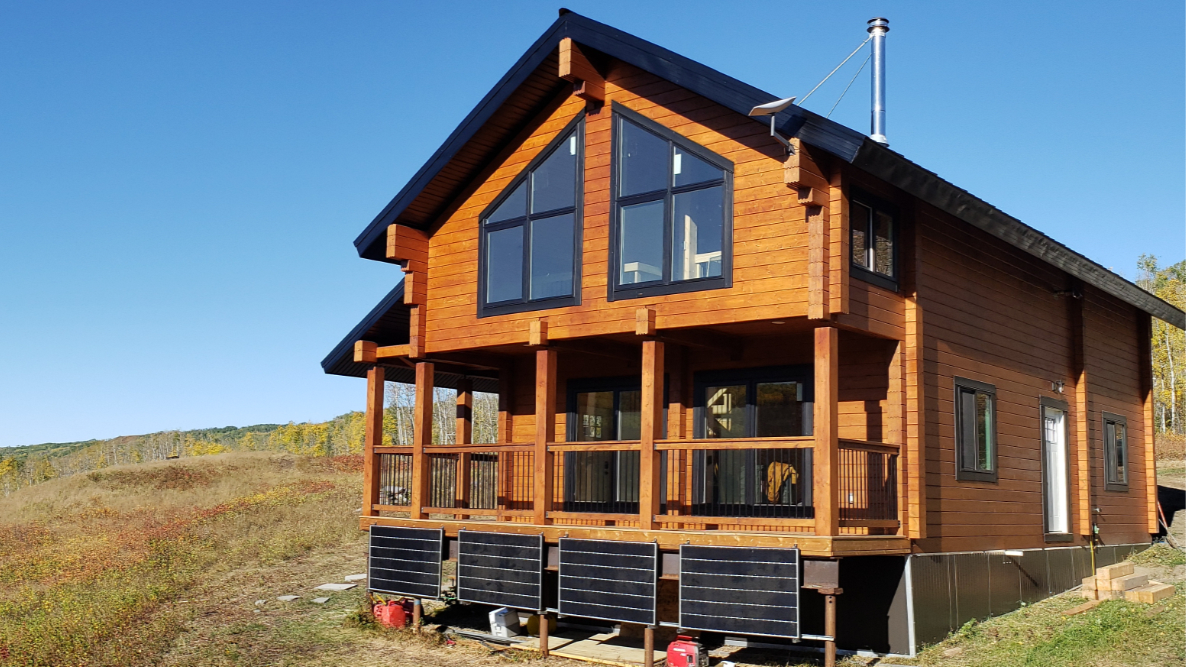
Glulam structures offer a warm, natural appearance with clean lines and visible wood grain. This creates a cozy, inviting atmosphere both inside and out—ideal for residential and wellness‑focused architecture.
⚡ Fast Construction
Because glulam undergoes minimal shrinkage, construction timelines are significantly shorter than with traditional solid timber. A glulam home can often be erected in just a few months, even without interior finishing.
💰 Cost‑Effectiveness
Glulam walls typically require no additional insulation or interior/exterior cladding. This reduces material costs, labour, and overall construction time, making it an economical choice without compromising quality.
- 02
One of the unique advantages of wooden homes is their natural ability to “breathe.” This doesn’t mean air passes freely through the walls — instead, the wood gently absorbs and releases moisture as indoor conditions change. This natural regulation helps maintain an optimal indoor humidity level, typically between 30% and 50%.
Maintaining this balanced humidity has a powerful impact on the indoor microclimate. It prevents the air from becoming overly dry in winter or excessively humid in summer, creating a consistently comfortable environment. This stability supports respiratory comfort, reduces irritation, and contributes to the overall well‑being of the people living inside.
In essence, a wooden home works with nature to create a healthier, more harmonious living space — one that feels good the moment you walk through the door.
- 03
At Froese Cabins, environmental safety isn’t an afterthought — it’s a core principle that guides every stage of our glulam production and construction process. We build homes that are not only strong and beautiful, but also healthy for the people who live in them and gentle on the environment.
🌲 FSC‑Certified Wood
All timber used in Froese Cabins glulam is sourced from FSC‑certified forests. This certification ensures that the wood comes from responsibly managed, ecologically clean forests where biodiversity, regeneration, and long‑term sustainability are protected. No harmful chemicals are used during harvesting or processing.
🧪 Environmentally Safe Adhesives
The adhesive used to bond our lamellae meets strict international environmental standards, including CE certification. This guarantees that the material does not release harmful substances into the air beyond safe, regulated limits. The result is a clean, healthy indoor environment for your family.
🏭 Modern, Responsible Production
Our glulam is manufactured using advanced equipment and precise technological controls. Every stage — from drying and lamination to final shaping — is carried out with strict adherence to environmental and quality requirements. This ensures consistent strength, stability, and safety in every beam we produce.
- 04
Building a log home with precision‑manufactured glulam components is one of the most efficient and predictable construction methods available. At Froese Cabins, the process is divided into clear stages — from design to turn‑key completion — so clients always know what to expect.
Below is a complete timeline for a 1,000 sq. ft. glulam log home.
⏱️ Total Timeline: Approximately 5–7 Months
This includes design, production, shell assembly, and full turn‑key finishing.
📌 Step‑by‑Step Construction Timeline
1. Project Approval — ~1 Month
• Finalizing the design
• Engineering and structural calculations
• Permitting and approvals
This stage ensures every detail is accurate before manufacturing begins.
2. Production of the Log Home Package — ~6 Weeks
• Lamella production
• Glulam beam lamination
• Profiling and pre‑cutting
• Quality control and packaging
All components are produced on modern equipment for perfect fit and fast assembly.
3. On‑Site Shell Assembly — ~2 Weeks
This stage includes the complete structural “box” of the home:
• Subfloor installation
• Exterior and interior wall assembly
• Roof truss installation
• Metal roofing installation
Precision‑cut components allow the structure to be assembled quickly and accurately.
4. Turn‑Key Finish Stage — ~2–3 Months
Once the shell is complete, the home moves into full finishing:
Interior Work
• Electrical and plumbing installation
• HVAC systems
• Interior insulation (if required)
• Drywall or interior paneling
• Flooring
• Kitchen and bathroom installation
• Interior doors, trim, and finishing carpentry
• Painting and final detailing
Exterior Work
• Windows and exterior doors
• Decks, porches, and railings
• Exterior finishing touches
• Site grading and landscaping (optional)
This stage transforms the structural shell into a fully livable, move‑in‑ready home.
⛅ What Can Influence the Timeline
• Size and complexity of the design
• Geographic location and site accessibility
• Seasonal weather conditions
• Availability of trades during finishing
Even with these variables, glulam construction remains one of the fastest and most predictable ways to build a high‑quality log home.
- 05
Yes. Glulam is classified as a highly fire‑resistant mass‑timber material. When exposed to fire, the outer surface forms a protective char layer that slows heat penetration and shields the structural core. This predictable charring behavior allows glulam elements to maintain their load‑bearing capacity for a significant period of time.
How does glulam behave during a fire?
As the surface burns, it turns into char — and that char acts as insulation. The interior of the beam or wall remains cool and structurally sound long after the fire begins. This gives occupants more time to evacuate and firefighters more time to respond.
Does glulam perform better than steel in a fire?
In many cases, yes.
Steel begins to lose strength at around 300°C, causing it to soften and deform. Glulam, however, burns slowly on the outside while the interior continues to carry load. This is why mass‑timber structures are approved for multi‑storey buildings worldwide.
Does oxygen penetrate glulam and make it burn faster?
No.
Glulam is dense and laminated, so oxygen does not penetrate deeply into the material. Only the outer surface burns, and once it chars, the char layer actually slows further combustion.
What usually ignites first in a house fire?
Typically, the first materials to ignite are interior finishes and furnishings, such as:
• PVC ceilings
• Upholstery and textiles
• Plastics
• Furniture
The structural glulam itself is not usually the first fuel source.
Are glulam homes safe in a fire?
Yes — when designed and built to code.
Glulam’s predictable fire performance allows engineers to design beams, walls, and columns that meet strict fire‑resistance ratings. Combined with modern alarms, sprinklers, and proper interior finishes, glulam homes offer excellent fire safety.
- 06
Handcrafted log homes use whole, natural logs shaped individually by artisans. Glulam profiled logs are engineered from multiple layers of kiln‑dried lumber bonded together for exceptional strength and stability.
Both are beautiful, but glulam offers far more precision, performance, and long‑term reliability.
Why do glulam logs perform better than solid handcrafted logs?
Because glulam logs are engineered, they resist the natural issues that come with solid timber:
• No twisting or warping
• Minimal cracking
• Virtually no settling
• Tight, consistent fits that stay tight
This means fewer adjustments, fewer surprises, and a home that performs exactly as designed.
Do glulam logs look “less natural” than handcrafted logs?
Not at all. Glulam logs are still real wood — just refined.
They maintain the warmth and beauty of timber but with a cleaner, more modern aesthetic. Many clients prefer the uniformity and precision because it creates a more polished, architectural look.
Are glulam log homes stronger?
Yes.
The lamination process creates a structural timber that is stronger than a solid log of the same size. This makes glulam ideal for long spans, open interiors, and modern design features that handcrafted logs can’t easily achieve.
How do glulam logs handle Alberta’s climate?
Exceptionally well.
Because they are kiln‑dried and engineered, glulam logs:
• Stay stable through extreme temperature swings
• Maintain tight seals in cold winters
• Reduce air leakage and heat loss
• Require less maintenance over time
They’re simply better suited to harsh climates than solid, naturally‑moving logs.
Do glulam log homes require settlement hardware?
No.
Unlike handcrafted log homes, glulam structures experience minimal settling, which means:
• No jacks
• No slip joints
• No seasonal adjustments
Just a clean, straightforward build.
Are glulam log homes more energy‑efficient?
Yes.
Precision‑milled profiles create tight, consistent joints that outperform traditional log‑to‑log fits. This results in:
• Better insulation performance
• Lower heating costs
• A more comfortable home year‑round
Is a glulam log home more expensive?
Glulam is a premium engineered product, but it often results in lower total cost of ownership because:
• Construction is faster
• Maintenance is lower
• Energy efficiency is higher
• Long‑term performance is more predictable
Clients who value quality, comfort, and longevity consistently choose glulam.
Why does your company prefer glulam over handcrafted logs?
Because it delivers the best balance of beauty, performance, and long‑term value.
Glulam allows us to build homes that are:
• Stronger
• More stable
• More energy‑efficient
• More precise
• More predictable over decades
It’s the modern evolution of log‑home building — and the standard we believe our clients deserve.
- 07
What wood species do you offer?
We primarily use Nordic spruce and pine, chosen for their exceptional stability, tight grain structure, and superior strength‑to‑weight ratio. These slow‑grown northern species are ideal for engineered glulam construction and outperform typical North American softwoods in consistency and long‑term performance.
If your project requires a specific species, we can source alternatives through our extended supplier network.
What log sizes are available?
Our glulam profiled logs are available in a range of thicknesses, heights, and interlocking profiles to match your architectural style and energy‑efficiency goals.
Common dimensions include:
• 5", 8", 10" and 11" of thickness
• 7", 8", 10" and 12" of height
• Multiple precision‑milled profiles for superior airtightness
Because glulam is engineered, every log is perfectly uniform — no taper, no variation, no surprises.
Where do your logs come from?
Our glulam logs are manufactured from sustainably harvested, slow‑grown Nordic timber sourced from FSC‑certified forests. The cold northern climate produces wood with:
• Tight annual rings
• High density
• Exceptional dimensional stability
• Minimal natural defects
This results in a stronger, more predictable product than traditional solid logs.
- 08
Yes. All of our turnkey homes built within Alberta are protected through Progressive Home Warranty, of which we are a registered member. This program provides comprehensive coverage, including:
• 1‑year materials and labour coverage
• 2‑year mechanical systems coverage
• 5‑year building envelope coverage
• 10‑year structural coverage
For projects outside Alberta where we supply only the log shell, warranty coverage on the log shell itself is provided through our manufacturing partner. Your local general contractor will supply the remaining warranty coverage required in your region.
We want every homeowner to feel confident knowing their investment is backed by trusted, long‑term protection.
- 09
Our Standard DIY Log Home Material Package provides all the essential engineered components needed to assemble a high‑quality, precision‑crafted log home. The package includes:
• 8" laminated, profiled exterior logs — pre‑cut, kiln‑dried, engineered White Spruce with interlocking profiles
• 5" laminated, profiled interior logs — pre‑cut, kiln‑dried, engineered White Spruce with interlocking profiles
• Engineered TJI floor joists
• Engineered TJI roof rafters or roof trusses (depending on project requirements)
• Fasteners — complete set for roof elements
• Adjustable post base connectors
• Joist and post hangers
• 2x8 casing boards for window and door block installation
• Framing lumber for exterior decks — engineered wood or treated lumber (included only if required in your project)
• Structural review of timber frame drawings
• Step‑by‑step assembly instructions
• Full 3‑D log home model development
• 2‑D review drawings for clarity and planning
This package is designed for homeowners or builders who want a complete, engineered log shell system ready for on‑site assembly, with all major components pre‑cut, pre‑drilled, and ready to install.
- 10
Our turn‑key pricing typically ranges from $280–$350 per square foot for our log homes, and $250–$290 per square foot for our traditional stick‑frame homes.
Because every custom home is unique, providing an exact per‑square‑foot price is challenging without reviewing your design. Many factors influence the final cost, including:
• Log species and grade
• Log size, profile, and engineering requirements
• Complexity of the floor plan
• Number of corners and architectural details
• Roof design, pitch, and structural requirements
• Roofing materials (metal, shingles, premium systems, etc.)
• Interior finishes (flooring, cabinetry, tile, fixtures, trim levels)
• Window and door specifications
• Mechanical systems and energy‑efficiency upgrades
• Site conditions, access, and foundation requirements
• Wrap‑around porches, covered decks, and exterior features
• Any custom elements or unique design touches you want to incorporate
If you have a rough plan, sketch, or even a general idea of what you want, we can prepare an approximate price to help you move forward with clarity and confidence